PART 1
The morning they poured concrete into my creek, I knew two things immediately.
First, the woman responsible had absolutely no idea what she had just done.
Second… in about six months, her million dollar house was going to start sinking like a cinder block in a swamp.
At the time, though, nobody was laughing. Especially not me.
The diesel engines arrived just after sunrise. I remember the smell before I saw anything… that sharp mix of exhaust, wet limestone dust, and hot metal drifting through the cottonwoods behind my house. When I stepped onto my back porch with my coffee, the sound hit me next. Concrete mixers grinding like giant metal stomachs, backup alarms beeping across the valley, men shouting over the roar of engines.
And then I saw it.
They were filling my creek.
A hundred and twenty yards behind my workshop, the water that had run clear through our property since before the Spanish American War was being buried under a gray river of concrete. A crew in hard hats were guiding the chute from a cement truck, dumping slurry directly into the channel while the current struggled underneath like something alive trying to breathe.
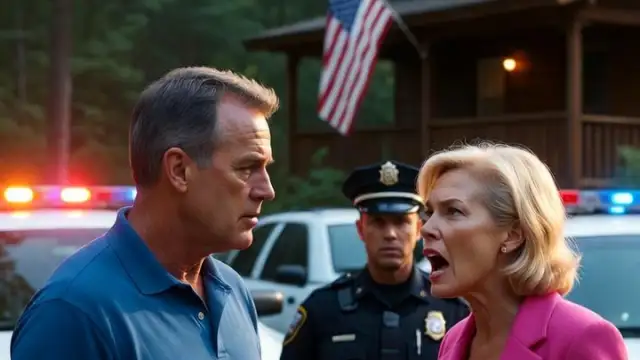
Standing there beside the trucks, wearing sunglasses and a cream colored blazer like she was supervising a fashion shoot instead of environmental vandalism, was the president of our HOA.
Her name was Lydia Carver.
Lydia lifted a hand and waved at me from across the creek like we were neighbors chatting over a fence.
“Morning, Mr. Lawson,” she called out. “Flood control project. HOA approved it last week.”
I remember staring at her for a long moment, letting the words settle in my head. Flood control.
Behind her, thirty thousand dollars worth of cement was already sealing over granite stones my grandfather had placed there by hand in 1952.
Flood control.
I took a sip of my coffee and walked down the slope toward the bank.
“You mind telling me,” I said calmly, “why your construction crew is pouring concrete into a natural waterway that doesn’t belong to your subdivision?”
Lydia smiled that smooth real estate smile people learn in expensive training seminars.
“Oh, the county will appreciate it,” she said. “Your creek has been causing runoff issues for Willow Ridge Estates. We’re simply stabilizing it before spring melt. Protecting everyone’s property values.”
She said it like she was doing charity work.
What Lydia didn’t know was that I had spent thirty two years working as a hydrology engineer with the Army Corps of Engineers.
And what she definitely didn’t know was that the creek she was filling had been carefully designed to prevent flooding long before she ever moved to this valley.
I leaned against the railing of the small wooden footbridge my grandfather built and watched the slurry pour.
The water had already started backing up.
Not much yet. Just a slow swelling behind the fresh concrete ridge forming in the channel. But to someone who had spent three decades studying water behavior, it looked exactly like the first few seconds of a problem that was going to become very expensive.
“You’re making a mistake,” I told her quietly.
Lydia tilted her head.
“I doubt that.”
I pointed downstream.
“You see those houses you built along the south bank? The big colonial style ones with the walkout basements?”
She followed my finger.
“Of course. Some of the most desirable homes in the community.”
I nodded slowly.
“Well,” I said, “this creek was designed to spread overflow across a natural floodplain before it ever reaches that part of the valley.”
She folded her arms.
“And?”
“And you just turned it into a concrete chute.”
For a second she looked puzzled.
Then she laughed.
Actually laughed.
“Mr. Lawson,” she said patiently, “we hired a consultant. I’m sure your… hobby level knowledge of water isn’t more accurate than professional engineers.”
Hobby level.
I almost smiled.
My grandfather had helped map half the watershed in this county back in the 1940s. I’d personally overseen flood control systems across three states. But Lydia had a consultant, which apparently outranked eighty years of engineering experience.
The last truck finished pouring about ten minutes later.
When the crew packed up, the creek that used to wind naturally through cottonwoods and granite stones now ran through a straight gray trench that looked like something behind a shopping mall.
The water was already moving faster.
I noticed that immediately.
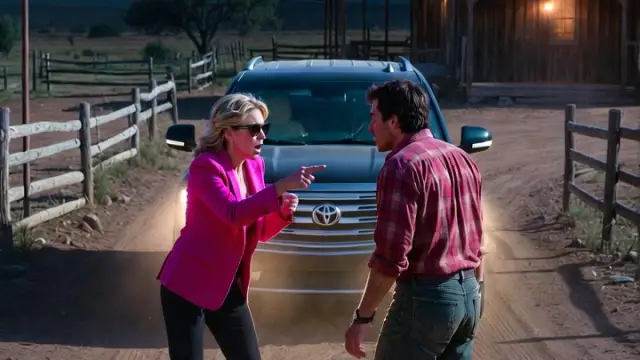
Lydia walked toward her white SUV, brushing dust off her blazer.
“Oh, and one more thing,” she said over her shoulder. “You’ll be receiving a compliance notice from the HOA this week. We’ve had some complaints about the… mechanical clutter behind your garage. Apparently your motorcycle parts are visible from several properties.”
I watched her open the car door.
“My land isn’t part of your HOA.”
She smiled again.
“That’s what your realtor thinks.”
Then she drove away.
The construction crew left shortly after, and suddenly the valley was quiet again except for the sound of water rushing through the new concrete channel.
It sounded wrong.
Not the soft, wandering babble the creek used to make over stones. This was sharper, faster… like water sliding down a metal pipe.
I stood there for a long time listening.
Eventually my wife, Rachel, came down from the house carrying another cup of coffee. She’s been teaching third grade for twenty five years, so she has the kind of calm patience that can survive just about anything.
She looked at the concrete channel.
“They really did it.”
“Yep.”
“Can they even do that legally?”
I took a slow breath.
“Not even a little.”
She looked at me carefully.
“You’re doing that thing again.”
“What thing?”
“The quiet voice,” she said. “The one you used when the city tried to build that drainage ditch across the high school baseball field.”
I rubbed my chin.
“Well… this one might be worse.”
Rachel stared at the creek.
“Why?”
I pointed downstream toward Willow Ridge Estates, where forty seven expensive houses sat along the valley floor like a row of glossy magazine photos.
“Because whoever designed that neighborhood never understood the original flood system,” I said.
“And Lydia just destroyed it.”
Rachel blinked.
“Meaning?”
I watched the water gather speed as it hit the straight concrete walls.
“Meaning,” I said slowly, “when the snowpack melts this spring… every drop of runoff from the mountain is going to shoot straight through that channel.”
“And where does it go?”
I pointed again.
Right at the row of million dollar homes.
Rachel stared at the water, then back at me.
“How bad?”
I thought about the snowfall reports I’d read the night before.
Heavy winter. Deep mountain accumulation.
A very fast melt season coming.
Then I looked at the concrete channel one more time.
“Bad enough,” I said quietly, “that Lydia Carver might have just built the most expensive mistake this county has ever seen.”
Rachel was silent for a moment.
Then she asked the question I’d been avoiding.
“What are you going to do?”
I didn’t answer right away.
Instead I walked down the bank and crouched near the fresh concrete, watching the way the current was already chewing at the edges.
Water always tells the truth if you know how to listen.
And right now it was telling me something interesting.
This wasn’t just a bad idea.
It was a disaster waiting to happen.
Finally I stood up.
“Well,” I said, brushing dust off my jeans, “first I’m going to make a few phone calls.”
Rachel sighed.
“To lawyers?”
I shook my head.
“Not yet.”
“Then who?”
I smiled slightly.
“Environmental regulators.”
She groaned softly.
“Oh no.”
“Oh yes.”
Because what Lydia didn’t understand yet… what nobody in Willow Ridge Estates understood…
was that altering a natural waterway without permits didn’t just break HOA rules.
It broke federal law.
And somewhere in Denver, a group of EPA investigators were about to become very interested in a brand new concrete channel in a mountain creek.
But that wasn’t even the part that would ruin Lydia Carver.
No.
The real problem was coming with the snowmelt.
And water…
always finds its way back.
But Lydia was about to learn that lesson the hard way.
And the moment she did… the entire neighborhood was going to learn it with her.
Part 2 is where Lydia decides to escalate the fight… and that’s when things start getting truly insane.
PART 2
Three days after Lydia Carver buried my creek under concrete, the official letter arrived.
Certified mail. Heavy envelope. HOA letterhead printed in gold like it was announcing a royal decree.
I opened it at the kitchen table while Rachel graded spelling tests beside me. She glanced over her glasses when she saw the heading.
“Please tell me that’s not what I think it is.”
“It is,” I said.
Violation notice.
According to the Willow Ridge Estates Homeowners Association, my property was now in violation of community aesthetic guidelines due to “visible storage of mechanical equipment and automotive components that negatively impact neighboring property values.”
Penalty: two hundred dollars per day until compliance.
Rachel stared at the number.
“Two hundred dollars… per day?”
I folded the letter slowly.
“They’re hoping I’ll panic.”
“And will you?”
I took a sip of coffee and shook my head.
“No. I’m mostly impressed.”
“Impressed?”
“Yeah,” I said. “It takes a special kind of confidence to fine someone whose land isn’t even part of your HOA.”
Rachel leaned back in her chair.
“So what do we do?”
I slid the letter across the table.
“Same thing we always do when someone overplays their hand.”
She raised an eyebrow.
“Which is?”
“We give them a chance to correct their mistake.”
That afternoon I wrote Lydia a reply.
Short. Professional. Certified mail.
The letter explained that my property existed eighty two years before Willow Ridge Estates was developed. The deed included mineral rights, water rights, and what lawyers politely call a grandfather exemption from any future subdivision restrictions.
In simpler terms, Lydia’s HOA had exactly zero authority over my land.
I even included copies of the original county filings from 1941.
When I dropped the envelope at the post office, I figured that would probably be the end of it.
I underestimated Lydia Carver.
Two days later a county building inspector showed up at my workshop.
Nice guy named Hernandez. Late forties, tired eyes, the look of a man who’d spent too many years refereeing arguments between stubborn property owners.
He walked slowly through my garage, glancing at the motorcycle frames, the shelves of engine parts, the old welding bench.
“Mind if I ask something off the record?” he said finally.
“Sure.”
He scratched his chin.
“You running a business out of here?”
“Nope.”
“Hobby?”
“Pretty much.”
He nodded.
“That’s what I figured.”
I leaned against a tool cabinet.
“So why are you here?”
He pulled a folded complaint from his clipboard.
“Anonymous tip says you’re operating an illegal chop shop dismantling stolen motorcycles.”
Rachel, who had been watering the garden outside, nearly dropped the hose when she heard that.
I laughed.
“You see any stolen bikes?”
Hernandez looked around.
What he saw were half restored vintage machines, labeled parts, maintenance manuals older than both of us.
“Nope,” he said.
He closed his clipboard.
“But I had to check. Complaint came through the county system.”
“Let me guess,” I said.
“HOA?”
He gave me a look that said he couldn’t officially confirm that but yes, absolutely.
Before he left he paused at the door.
“You might want to talk to a lawyer,” he said quietly. “Somebody’s trying pretty hard to cause you trouble.”
I nodded.
“Oh, I know.”
What Lydia didn’t understand was that harassment works both ways.
If you push long enough, eventually you hit someone who pushes back harder.
That evening I walked down to the creek again.
The concrete channel looked even worse now that it had dried. The water was moving faster than before, cutting through the straight trench like a knife.
Natural streams don’t move like that.
They bend, slow down, spread out.
Concrete removes all of that.
Which means energy has to go somewhere.
I crouched near the edge and dipped a measuring rod into the flow.
The velocity had increased almost thirty percent since the pour.
That was… interesting.
Rachel walked down behind me.
“You’re measuring it?”
“Yep.”
“Why?”
“Because Lydia’s about to make another mistake.”
“How do you know?”
I pointed toward Willow Ridge Estates.
“People like Lydia don’t stop when they lose the first round.”
Rachel crossed her arms.
“So what happens next?”
I stood up and wiped my hands.
“They escalate.”
She sighed.
“Great.”
I looked downstream again.
The valley was quiet in the evening light, expensive houses sitting in neat rows along the creek bank.
Perfect lawns. White fences. Decorative mailboxes.
All built exactly where the natural floodplain used to spread spring runoff.
Developers had ignored that detail twenty years ago because the creek had always absorbed the overflow before it reached them.
Now the system was gone.
Replaced by a concrete chute.
Rachel followed my gaze.
“You’re thinking about the snowpack again, aren’t you?”
I nodded.
“State report came out yesterday.”
“And?”
“Highest accumulation in fifteen years.”
Rachel winced.
“That sounds bad.”
“It will be.”
She watched the rushing water for a moment.
“Do you think Lydia realizes what she’s done?”
I shook my head.
“Not yet.”
“And when will she?”
I smiled faintly.
“Spring.”
Three weeks passed.
For a while everything went quiet.
Then Lydia made her move.
I found out about it from a man named Victor Novak.
Victor lived two houses inside the subdivision, retired machinist, originally from Pittsburgh. He showed up at my workshop one evening looking nervous and carrying a folded sheet of paper.
“You’re Mr. Lawson, right?”
“That’s me.”
He handed me the paper.
“HOA board meeting minutes. I thought you should see it.”
I scanned the page.
Emergency Flood Mitigation Resolution.
Approved budget: one hundred and thirty four thousand dollars.
Purpose: permanent structural stabilization of Cotton Creek channel.
I looked up slowly.
“Permanent stabilization.”
Victor nodded grimly.
“They’re planning to extend the concrete. All the way through the subdivision.”
Rachel stepped closer.
“You mean the entire creek?”
“Yep,” Victor said.
He rubbed the back of his neck.
“I voted against it. Couple others did too. But Lydia had photos… said the creek was eroding the banks and threatening property foundations.”
“What photos?” I asked.
“Looked like big holes near the bank.”
I frowned.
Those holes hadn’t existed two weeks ago.
Victor lowered his voice.
“Between you and me… some of us think someone might’ve dug them.”
I exhaled slowly.
Of course she did.
Manufacture the problem. Sell the solution.
Classic real estate tactic.
Victor looked toward the creek.
“Is she right about the flood risk?”
I shook my head.
“No.”
“So what happens if they pour more concrete?”
I hesitated.
Then I told him the truth.
“The water’s going to move faster.”
“How much faster?”
“Enough that when snowmelt hits… it won’t spread out anymore.”
Victor blinked.
“Where does it go then?”
I pointed down the valley.
Directly at Willow Ridge Estates.
He followed my finger… and suddenly his face went pale.
“Oh,” he whispered.
“Yeah,” I said.
Victor stood there for a long time staring at the houses.
Finally he looked back at me.
“Should we stop her?”
I thought about the permits she hadn’t filed.
The environmental laws she had already broken.
The agencies that would become very interested once someone told them.
“Oh,” I said quietly, “we’re going to.”
Rachel glanced at me.
“You already called someone, didn’t you?”
I smiled.
“Three agencies, actually.”
Victor blinked.
“Which ones?”
I folded the HOA document and handed it back.
“County environmental enforcement.”
“State water authority.”
“And the EPA.”
Victor let out a low whistle.
“Lydia’s not gonna like that.”
“No,” I said.
“She really isn’t.”
But Lydia Carver wasn’t the kind of person who backed down.
Not when power was on the line.
And two weeks later… she proved it.
Because the next time we met face to face, she didn’t bring a violation notice.
She brought something else.
An envelope.
And inside that envelope was half a million dollars.
Part 3 is where Lydia tries to buy my silence… and when that fails, the real war begins.
PART 3
The envelope was thicker than it needed to be.
That was the first thing I noticed when Lydia Carver slid it across the glass desk in her real estate office. The second thing was the smell in the room… vanilla candles and expensive carpet cleaner, the kind of artificial sweetness people use when they want a place to feel calm even when it isn’t.
Outside the window, the mountains were still capped with late winter snow. Inside, Lydia leaned back in her chair like a woman who believed she had already won.
“Mr. Lawson,” she said smoothly, “I think we both know this situation has gotten… unnecessarily complicated.”
I didn’t touch the envelope yet.
“You filled a natural waterway with concrete,” I said. “That’s not complicated. That’s illegal.”
She gave a light laugh, the kind people use when they want to pretend something isn’t serious.
“Illegal is a strong word.”
“It’s also the correct one.”
Her smile tightened just a little.
For a moment we sat there in silence. Lydia’s office looked exactly like you’d expect from someone who sold luxury homes… glass desk, brushed steel lamps, framed photos of smiling families standing in front of oversized houses.
Every inch of the place was designed to project success.
Eventually she tapped the envelope.
“Why don’t you open it.”
I picked it up.
Inside was a cashier’s check.
Five hundred thousand dollars.
Rachel, who had insisted on coming with me to this meeting, inhaled sharply beside me.
Lydia watched my reaction carefully.
“That’s half a million dollars,” she said. “Tax free if you accept the accompanying agreement.”
I flipped through the rest of the packet.
Non disclosure contract. Property transfer clause. Relocation timeline.
It took about ten seconds to understand what she was proposing.
“You want me to sell my land,” I said.
“Not sell,” she corrected gently. “Relocate.”
“And the creek?”
“The HOA would assume management of water rights for proper environmental oversight.”
I stared at her.
“You mean you want control of the creek.”
She shrugged lightly.
“That land has become a… point of conflict. We think everyone would be happier if the situation was resolved cleanly.”
Rachel leaned forward.
“You’re trying to buy us out.”
Lydia clasped her hands on the desk.
“I’m offering a generous settlement.”
Rachel’s voice sharpened.
“You destroyed his property.”
Lydia’s eyes flicked toward her.
“We improved flood safety for the community.”
I almost laughed.
“By removing the flood control system.”
She tilted her head.
“You keep saying that like it’s true.”
“It is true.”
“Well,” Lydia said calmly, “that’s a debate lawyers can have if you choose to reject my offer.”
There it was.
The threat hiding behind the polite language.
I leaned back in my chair.
“You really think half a million dollars solves this.”
Her smile returned.
“Most people would consider it more than fair.”
I slid the check back into the envelope and set it on the desk between us.
“You’re missing something.”
“And what’s that?”
“I spent thirty two years studying how water moves through landscapes,” I said. “You spent twenty years selling houses.”
Her smile thinned.
“I’m not sure what that has to do with anything.”
“It means when I say that concrete channel is going to destroy your subdivision during spring melt… I’m not guessing.”
For the first time, Lydia’s expression flickered.
Just a tiny crack in the armor.
Then it disappeared.
“Fear tactics won’t change the facts.”
“I’m not trying to scare you,” I said.
“I’m warning you.”
She leaned forward.
“Let me be very clear, Mr. Lawson. If you refuse this offer, the HOA will pursue every legal avenue available. Litigation. Property nuisance claims. Code enforcement. We will make your life extremely uncomfortable.”
Rachel gave a dry laugh.
“You already tried that.”
Lydia’s eyes hardened.
“And we can try much harder.”
There was a moment of silence.
Then Lydia said something that she would regret for the rest of her life.
“Legal battles are expensive. Even when you win, you lose. Your wife’s teaching position… your little motorcycle hobby… reputations can be fragile things.”
Rachel froze beside me.
I slowly reached into my jacket pocket.
And turned off the small digital recorder that had been running since the meeting began.
Single party consent state.
Perfectly legal.
I stood up.
“Thank you for your time, Lydia.”
She frowned.
“You’re walking away from half a million dollars?”
I tucked the recorder into my pocket.
“I’m walking away from a felony.”
Her eyes narrowed.
“What does that mean?”
“It means you just attempted to bribe me while threatening retaliation if I refused.”
Rachel stood too.
“Which is now recorded.”
For a full second Lydia didn’t move.
Then the color drained from her face.
“You can’t—”
“Actually,” I said calmly, “I can.”
We left the office without another word.
The moment the door closed behind us Rachel grabbed my arm.
“You recorded that?”
“Yep.”
Her eyes widened.
“Please tell me you already know who’s getting a copy.”
I smiled.
“Three guesses.”
“EPA?”
“Yep.”
“State investigators?”
“Yep.”
“And…”
“The county attorney.”
Rachel let out a long breath.
“Well,” she said, “this just became very serious.”
“Very.”
For about two weeks after that meeting, Lydia went quiet.
Too quiet.
Then one night, just after two in the morning, my phone buzzed.
Security alert.
I rolled out of bed and opened the camera feed.
Two figures were inside my workshop.
Hoodies. Gloves. Moving fast.
They weren’t stealing things.
They were destroying them.
A shelf of vintage carburetors crashed to the floor.
A toolbox was dumped across the concrete.
One of them walked over to my restored 1972 Triumph motorcycle and pushed it over.
The bike hit the ground with a sound that made my stomach twist.
Then the camera caught something else.
Headlights.
A white SUV parked at the end of my driveway.
The security camera zoomed automatically.
Vanity license plate.
LCV 1.
Rachel sat up in bed beside me.
“What’s happening?”
I handed her the phone.
She stared at the screen.
“Oh my God.”
The two vandals ran out of the workshop a minute later and climbed into the SUV.
The car drove away before I even reached the front door.
Rachel looked at me.
“That was Lydia’s car.”
“Yep.”
“You think her kids did it?”
“Probably.”
She was quiet for a moment.
Then she said the one thing Lydia had failed to understand about engineers.
“You documented everything, didn’t you.”
I nodded slowly.
Camera footage.
Recorded threats.
Environmental violations.
And now property damage.
Rachel folded her arms.
“Well,” she said softly, “if Lydia Carver wanted a war…”
I looked out the window toward the creek.
The water was already moving faster with early snowmelt.
“Oh,” I said.
“She’s got one.”
But Lydia had made a mistake that night.
Actually… two mistakes.
The first was letting her SUV show up on camera.
The second was assuming that the only fight she needed to worry about was the one with me.
Because by the time the EPA finished reviewing the creek violations…
and the FBI finished following the money trail inside the HOA accounts…
Lydia Carver wasn’t just facing a lawsuit.
She was facing prison.
And the worst part for her?
Spring melt hadn’t even started yet.
Part 4 is where the investigations begin… and where we discover the HOA has been stealing hundreds of thousands of dollars from their own residents.
PART 4
The first government vehicle showed up on a Tuesday morning.
Plain white pickup, state emblem on the door, two people inside wearing those field jackets environmental investigators seem to favor. The kind with a dozen pockets and mud on the boots like they actually go outside instead of sitting in offices.
Rachel was watering the tomatoes when they pulled into the driveway.
She walked into the workshop a minute later and leaned on the doorframe.
“You’ve got company.”
“Good company or lawsuit company?”
“Government company.”
I wiped my hands on a rag and stepped outside.
The man who climbed out of the truck introduced himself as Mark Delgado, regional water enforcement for the state environmental agency. The woman beside him was Karen Holt, federal investigator with EPA Region Eight.
Karen carried a tablet and a folder thick enough to stop a handgun round.
“Mr. Lawson,” she said, “we received a report regarding unauthorized modification of a natural waterway.”
I pointed toward the creek.
“You might want to see it before the county tries to pretend it never happened.”
They followed me down the slope.
For a long moment neither of them spoke.
The concrete channel cut through the cottonwoods like a scar. Water rushed through it fast and loud, bouncing against the straight walls instead of flowing naturally like it had for generations.
Karen knelt near the edge.
“Who authorized this?”
“HOA president,” I said. “Lydia Carver.”
Mark looked upstream and downstream carefully.
“Any permits filed with the county?”
“Nope.”
“State environmental review?”
“Nope.”
“Army Corps consultation?”
“Nope.”
Karen looked up at me slowly.
“So they skipped… every level of approval.”
“Looks that way.”
She stood and tapped something into her tablet.
“Well,” she said, “that’s going to make our paperwork easier.”
Rachel leaned closer to me.
“That sounded… ominous.”
I nodded.
“It should.”
Karen turned back toward the channel.
“You said the work was completed three weeks ago?”
“Just under.”
“Construction company?”
“Pinnacle Earthworks.”
That name made Mark snort.
“Those guys again.”
“You know them?” I asked.
“Three environmental violations in the last five years,” he said. “Unauthorized dredging. Wetland fill. Illegal bank reinforcement.”
Karen nodded.
“They have a reputation.”
She took several photos, measured the width of the channel, then stood quietly watching the water flow for almost a minute.
“You’re an engineer, correct?”
“Retired hydrology.”
She gestured toward the water.
“Then you already know what this is going to do.”
I nodded slowly.
“Yep.”
Mark looked between us.
“What?”
I pointed downstream.
“Those houses.”
The subdivision spread across the valley like a brochure for expensive suburban living. Neatly arranged homes, manicured lawns, decorative bridges over smaller drainage paths.
Mark frowned.
“They’re built pretty close to the creek.”
“Closer than they should be,” I said.
Karen crossed her arms.
“What was the natural channel design before this?”
I walked over to a large granite stone that now stuck halfway out of the concrete.
“My grandfather placed these rocks by hand seventy years ago. They slowed the water and spread overflow across a floodplain before it reached the lower valley.”
Mark raised an eyebrow.
“So it absorbed runoff.”
“Exactly.”
Karen stared at the rushing water.
“And the concrete removed that system.”
“Exactly.”
Mark looked downstream again.
“And now the water will accelerate straight through.”
“Exactly.”
Karen nodded slowly.
“That’s… not good.”
“Nope.”
Rachel folded her arms beside me.
“How not good?”
I pointed at the mountains.
“You see all that snow up there?”
She nodded.
“Every bit of it melts in about six weeks.”
Karen looked back at the channel.
“And this turns the creek into a chute.”
“Yep.”
Mark rubbed the back of his neck.
“Which means the water doesn’t spread out anymore.”
“Nope.”
Karen finished the sentence quietly.
“It hits the subdivision at full velocity.”
“Exactly.”
Rachel exhaled.
“Oh boy.”
Karen stood and closed her folder.
“Well,” she said, “in the meantime we’re opening a federal violation case.”
“How bad?” Rachel asked.
Karen shrugged lightly.
“Unauthorized waterway modification, habitat destruction, Clean Water Act violation… those fines can reach twenty five thousand dollars per day.”
Rachel blinked.
“Per day?”
Mark nodded.
“And that’s just federal penalties. State fines stack on top.”
Rachel looked toward Willow Ridge Estates.
“Lydia has no idea, does she.”
I shook my head.
“Not yet.”
Karen looked at me.
“Mr. Lawson, we’re also going to need a statement from you about the incident and any related harassment from the HOA.”
I handed her a flash drive.
Security footage.
Audio recording.
Copies of Lydia’s offer.
Karen looked at the drive, then at me.
“You’ve been preparing.”
I shrugged.
“Engineers like documentation.”
She smiled slightly.
“That’s going to help us a lot.”
For the next hour they photographed everything.
Measured the channel.
Took water samples.
By the time they finished, three different agencies were officially investigating Willow Ridge Estates.
And that was just the environmental side.
Because later that same afternoon, another visitor arrived at my workshop.
A young woman in jeans and a CSU hoodie carrying a cardboard box full of paperwork.
She introduced herself as Emily Vargas.
Third year law student.
University of Colorado Environmental Legal Clinic.
“I’ve been reviewing public financial records for Willow Ridge Estates,” she said, setting the box on my workbench.
“What kind of records?” Rachel asked.
Emily opened the box.
“HOA budgets. Contractor payments. Emergency assessments.”
She spread a few documents across the table.
The numbers were… interesting.
Concrete project total cost: 134,000 dollars.
Estimated value of actual work: around 40,000.
Rachel frowned.
“Wait… where did the rest go?”
Emily tapped a highlighted column.
“Consulting fees.”
“Consulting for what?”
“That’s the interesting part,” she said.
She flipped another document around.
Company name: Carver Property Consulting LLC.
Rachel looked at me slowly.
“Carver… as in Lydia Carver?”
Emily nodded.
“And this one,” she said, pointing to another line.
Blue Ridge Environmental Solutions.
Registered owner: Lydia’s brother in law.
Rachel leaned back.
“Oh my God.”
Emily folded her arms.
“The HOA didn’t just destroy your creek.”
“They embezzled about ninety thousand dollars from their own residents while doing it.”
The workshop went quiet.
Outside, the concrete channel roared louder as afternoon runoff increased.
Rachel finally spoke.
“So Lydia stole money from her neighbors… to destroy the flood system protecting their houses.”
Emily nodded.
“Pretty much.”
I looked toward the creek again.
Water was already pushing faster than last week.
Spring melt had started early.
Which meant Lydia Carver now had three problems.
Federal investigators.
Financial fraud.
And a concrete flood chute pointed straight at her own neighborhood.
Rachel watched the water for a moment.
Then she asked the question that had been hanging in the air all afternoon.
“When the snow really melts…”
“How bad will it be?”
I thought about the mountain snowpack.
The concrete channel.
The subdivision sitting directly in the floodplain.
Then I told her the truth.
“Bad enough that Lydia’s biggest problem won’t be the EPA.”
Rachel frowned.
“What will it be?”
I pointed downstream again.
“The water.”
And at that exact moment, none of us knew just how fast the situation was about to spiral out of control.
Because Lydia Carver wasn’t finished making mistakes.
Not even close.
Part 5 is where we discover the HOA fraud runs much deeper… and Lydia makes a desperate move that pushes the entire situation toward disaster.
PART 5
If you have never watched someone slowly realize they are standing in the middle of their own disaster, it is a strange thing to witness.
At first they deny it.
Then they minimize it.
And finally… when the evidence starts piling up around them like bricks… they panic.
Lydia Carver reached the panic stage about two weeks after the investigators visited my property.
The first sign was the HOA meeting.
Victor Novak called me that night around nine o’clock. His voice had that tone people get when they’ve just walked out of a room where something uncomfortable happened.
“You sitting down?” he asked.
“I can sit,” I said. “What happened.”
He let out a long breath.
“Lydia lost her mind tonight.”
That got my attention.
“Define lost her mind.”
“Board meeting,” Victor said. “Started normal. Budget updates, landscaping complaints, mailbox regulations… the usual nonsense.”
“And then?”
“And then someone asked about the environmental investigation.”
I leaned back in my chair.
“What did she say.”
Victor made a small noise like he couldn’t believe it himself.
“She said the investigators were being manipulated.”
“By who?”
“You.”
Rachel, who was sitting across the table grading homework papers, looked up.
“Me?” I said.
Victor continued.
“She told everyone you were a disgruntled former military engineer who hated development and was trying to sabotage the neighborhood.”
Rachel snorted.
“That’s creative.”
Victor didn’t laugh.
“It gets better.”
I rubbed my forehead.
“Go on.”
“She said the concrete project was only the first phase. That the HOA needed to extend the channel through the entire subdivision to protect against what she called engineered flooding.”
“Engineered flooding?” Rachel repeated.
“Her words.”
I sat there for a second letting that sink in.
“She thinks I’m causing floods.”
Victor lowered his voice.
“She actually said the phrase environmental terrorism.”
Rachel burst out laughing.
“Oh wow.”
Victor didn’t.
“She also proposed another emergency assessment.”
“How much?”
“Two thousand dollars per homeowner.”
Rachel stopped laughing.
“That’s nearly a hundred thousand dollars.”
“Yep.”
“For what?”
Victor answered quietly.
“More concrete.”
I stood up slowly and walked toward the window.
Outside, Cotton Creek moved fast and loud through the gray trench Lydia had created. Early meltwater from the mountains was already pushing harder each day.
“She can’t be serious,” Rachel said.
Victor gave a bitter chuckle.
“Three board members walked out of the meeting.”
“What?”
“They resigned on the spot.”
I turned around.
“Why?”
“Because Emily Vargas showed up.”
Rachel blinked.
“Our law student?”
“Yep.”
Victor paused for a moment.
“She brought documents.”
“What kind of documents?” I asked.
“The kind that show ninety thousand dollars missing from HOA accounts.”
Rachel leaned back in her chair.
“Oh… that must have been fun.”
Victor laughed nervously.
“You should have seen Lydia’s face.”
Apparently Emily had walked into the meeting carrying the same cardboard box she brought to my workshop. She calmly placed the financial records on the table and explained exactly where the missing money had gone.
Consulting contracts.
Emergency contractor premiums.
Administrative fees.
All tied to companies connected to Lydia’s family.
For a moment the entire room had gone silent.
Then one of the homeowners asked the obvious question.
“Are you saying our HOA president stole from us?”
Emily had simply replied, “I’m saying the financial trail suggests that possibility.”
Victor said Lydia exploded after that.
Accusations. Shouting. Claims of conspiracy.
The meeting ended fifteen minutes later with half the room threatening lawsuits.
When Victor finished telling the story, Rachel slowly shook her head.
“She’s unraveling.”
“Yep.”
I looked out the window again.
The water was moving even faster now.
Every hour the temperature climbed a little higher in the mountains.
Which meant snowpack was melting earlier than expected.
Rachel followed my gaze.
“You’re thinking about the creek again.”
“Always.”
Victor cleared his throat over the phone.
“So… should we warn the neighbors?”
Rachel answered before I could.
“Warn them about what?”
Victor hesitated.
“About the flooding.”
The room went quiet.
Rachel looked at me.
“Well?”
I thought about that question carefully.
Because it wasn’t simple.
If we warned them now, the HOA might try to fix the problem before snowmelt peaked. That would reduce the damage… but it might also let Lydia avoid full responsibility for the environmental crimes she’d already committed.
If we stayed quiet…
Nature would handle the lesson.
Eventually I said the only honest thing I could.
“I can’t predict the exact outcome.”
Rachel raised an eyebrow.
“But you know it’s coming.”
“Yep.”
Victor spoke again.
“How bad could it be?”
I closed my eyes for a moment and pictured the valley in my head.
Mountain snowpack.
Concrete channel.
Subdivision built across the floodplain.
Then I gave him the engineer’s answer.
“If the melt hits fast…”
“Yeah?”
“Some of those basements are going to fill like bathtubs.”
Victor was silent for several seconds.
Finally he muttered one word.
“Damn.”
But Lydia Carver still believed she was in control.
The next morning proved it.
Because at exactly seven thirty a moving truck pulled into her driveway.
A very large moving truck.
Rachel noticed it first while we were drinking coffee on the porch.
“Why is Lydia packing furniture?”
I grabbed the binoculars from the shelf near the door.
Sure enough, movers were carrying boxes out of Lydia’s house.
Expensive furniture.
Paintings.
Electronics.
Everything.
Rachel frowned.
“That’s odd.”
“Not really,” I said quietly.
“What do you mean?”
I handed her the binoculars.
She watched for a moment.
“Her Tesla’s packed too.”
“Yep.”
Rachel slowly lowered the binoculars.
“You think she’s leaving.”
I nodded.
“Looks like it.”
Rachel turned toward me.
“But the HOA investigations… the financial records… the environmental charges…”
“Exactly.”
Rachel’s eyes widened.
“She’s running.”
Right then my phone buzzed.
Caller ID: Emily Vargas.
I answered.
“You seeing this?” she asked immediately.
“The moving truck?”
“Yeah.”
“Hard to miss.”
Emily sounded breathless.
“I just checked property records this morning. Lydia bought a house in Florida last week.”
Rachel mouthed the word Florida.
I nodded.
Emily continued.
“She’s liquidating assets too. Investment accounts closed. Money transfers everywhere.”
I stared at Lydia’s house across the valley.
“So she’s planning to disappear.”
“Looks like it.”
Rachel crossed her arms.
“That woman destroyed a creek, stole money from her neighbors, and now she thinks she can just leave?”
Emily sighed.
“Not if the federal investigation moves fast enough.”
I watched the movers carry another couch out the front door.
“Problem is… investigations take time.”
Emily didn’t answer for a moment.
Then she said something interesting.
“Well… there might be another way Lydia gets stopped.”
Rachel leaned closer.
“What do you mean?”
Emily’s voice dropped.
“I just spoke with a friend at the National Weather Service.”
“And?”
“They issued a flood watch this morning.”
I looked at the creek.
Water was already slamming through the concrete trench like a firehose.
Emily finished the sentence quietly.
“Peak snowmelt is arriving three weeks early.”
Rachel looked at me slowly.
“How soon?”
I checked the water gauge data on my phone.
Then I looked at Lydia’s house one more time.
“Soon enough,” I said.
And that was when the first crack appeared in the concrete channel.
Part 6 is where the spring melt hits… and Lydia’s “flood control system” turns the entire neighborhood into a lake.
PART 6
The first crack in the concrete showed up three days later.
Not dramatic. Not the kind of explosion people expect when something fails. Just a thin, jagged line running across the edge of the channel where the water slammed hardest into the corner near the cottonwoods.
I noticed it while checking the flow gauge just after sunrise.
The creek was already louder than normal, the water pushing harder with each hour as mountain snowpack started melting faster than anyone predicted. Early spring sunlight had turned the peaks above the valley into slow dripping reservoirs, and all of that water was heading in one direction.
Straight toward Willow Ridge Estates.
Rachel walked down the slope behind me carrying two cups of coffee.
“You’ve been staring at that crack for ten minutes,” she said. “Tell me it’s not what I think.”
I pointed at the concrete.
“That section wasn’t reinforced properly.”
“What does that mean?”
“It means the pressure’s already higher than whoever built this channel expected.”
Rachel looked upstream where the water rushed through the gray trench like a racing river.
“And when the snow melts faster?”
I took a slow breath.
“Then the pressure increases.”
She followed the line of the creek downstream, toward the neat rows of houses in Willow Ridge.
“And then?”
“Then the water starts looking for somewhere else to go.”
Rachel sighed softly.
“I’m guessing that somewhere else isn’t good news.”
“Nope.”
By mid afternoon the National Weather Service issued an official flash flood advisory for the valley.
Temperatures in the mountains had jumped nearly fifteen degrees above seasonal average. The snowpack that normally melted gradually across six weeks was suddenly draining like a tipped bucket.
Which meant Cotton Creek was about to experience its first real test since Lydia poured concrete into it.
I stood on the bank watching the current accelerate.
The channel had turned the creek into something unnatural. Instead of wandering through rocks and sand like a living thing, it now shot forward in a straight line, louder and faster every hour.
Water hates straight lines.
Given enough pressure, it finds a way out.
Around four o’clock my phone rang.
Victor Novak again.
“You seeing this?” he asked.
“I’m watching it.”
“You better come down here.”
“I’m on my way.”
Willow Ridge Estates looked different that afternoon.
At first glance nothing seemed wrong. The same manicured lawns, the same decorative stone bridges over smaller drainage ditches, the same quiet suburban calm.
But when I stepped out of my truck I heard something.
Pumps.
Several homeowners were standing near the creek bank staring at the water.
Victor waved me over.
“You hear that?” he said.
I nodded.
Basement sump pumps.
Already running.
“That’s early,” Rachel murmured beside me.
The water level had climbed almost eight inches since morning.
That doesn’t sound like much until you realize the concrete channel prevents overflow spreading. Instead of widening the creek like nature intended, all that water stacked vertically inside the trench.
Which increased velocity.
Which increased pressure.
And pressure always finds weak points.
One of the homeowners stepped toward me.
A middle aged guy in a golf shirt I’d never met before.
“You’re the engineer, right?”
“Something like that.”
He pointed at the creek.
“Is this normal?”
I studied the flow.
“No.”
His face tightened.
“Should we be worried?”
I didn’t answer right away.
Instead I looked at the houses along the bank. Many of them had walkout basements that sat only a few feet above the natural floodplain.
Then I gave him the honest answer.
“If the water keeps rising like this… you’re going to want sandbags.”
The man went pale.
Victor rubbed his forehead.
“I told them.”
“Told them what?”
“That Lydia’s concrete channel might cause flooding.”
Rachel glanced toward the subdivision entrance.
“Speaking of Lydia… where is she?”
Right on cue, a white Tesla rolled into the street.
Lydia stepped out wearing sunglasses and a jacket like she was attending a weekend brunch instead of a potential disaster zone.
She walked straight toward the creek.
“What exactly is everyone doing down here?” she asked sharply.
One of the homeowners pointed at the water.
“It’s rising.”
Lydia waved dismissively.
“That’s normal runoff.”
Victor shook his head.
“No it isn’t.”
She turned toward him.
“Victor, please don’t start another panic. The flood control system is functioning exactly as intended.”
Rachel couldn’t help herself.
“What flood control system?”
Lydia’s eyes snapped toward her.
“The concrete channel.”
Rachel gestured toward the rushing water.
“That thing is turning the creek into a firehose.”
Lydia scoffed.
“You people clearly don’t understand hydrology.”
I stepped forward.
“I do.”
She smiled thinly.
“Oh yes, our resident creek expert.”
“Thirty two years with the Army Corps,” I said.
Her smile faltered slightly.
I pointed at the water.
“You removed the floodplain.”
“No, we stabilized erosion.”
“You removed the floodplain,” I repeated calmly. “Which means the runoff no longer spreads out before reaching this neighborhood.”
Victor added quietly, “Meaning all that water now comes straight here.”
Lydia folded her arms.
“The consultant assured us that would not happen.”
Rachel raised an eyebrow.
“What consultant?”
“The environmental engineering firm.”
I almost laughed.
“You mean your landscaping contractor cousin?”
That hit a nerve.
Her face flushed.
“You have absolutely no authority here, Mr. Lawson.”
“No,” I agreed. “But the water does.”
Right then the creek surged again.
Not dramatically. Just another rise, maybe two inches. But the speed increased enough that everyone could hear it.
The concrete walls amplified the sound like a giant echo chamber.
One of the homeowners whispered, “That’s louder than this morning.”
I crouched near the edge and dipped the flow rod again.
The velocity reading made my stomach tighten.
Rachel saw my face.
“What?”
“It just jumped another fifteen percent.”
Victor swore under his breath.
Lydia crossed her arms stubbornly.
“It’s temporary runoff.”
I stood slowly.
“Maybe.”
“But if that crack upstream widens…”
She blinked.
“What crack?”
I pointed upstream.
“There’s a fracture in the channel wall.”
The homeowners exchanged nervous glances.
Lydia scoffed.
“That’s ridiculous.”
Rachel shook her head.
“No. What’s ridiculous is building a concrete river aimed directly at your own neighborhood.”
The creek roared again.
This time everyone heard the difference.
Water slammed into the bend near the subdivision entrance hard enough to splash over the bank.
Only a little.
But enough.
One of the homeowners swore.
Victor whispered, “That’s new.”
Lydia’s voice sharpened.
“Everyone relax. This is exactly why we reinforced the channel.”
I shook my head.
“No.”
“What?”
“You didn’t reinforce it.”
“What are you talking about?”
I pointed upstream again.
“That crack isn’t a cosmetic flaw.”
Rachel understood immediately.
“Oh no.”
Victor looked between us.
“What?”
I exhaled slowly.
“That section is about to fail.”
Lydia laughed.
“That’s absurd.”
And then we heard it.
A deep hollow sound from upstream.
Not loud.
But unmistakable.
Concrete shifting under pressure.
Rachel whispered, “Was that…?”
I didn’t answer.
Because the next sound was louder.
A sharp crack echoing through the channel.
Everyone turned toward the source.
And for the first time since this entire mess began… Lydia Carver’s confidence vanished.
The water level surged again.
Victor whispered one word.
“Run.”
Part 7 is where the channel finally fails… and the flood Lydia created turns her million dollar neighborhood into a swamp.
PART 7
The moment Victor said run, the creek answered him.
A deep grinding sound rolled down the channel like distant thunder… concrete shifting against pressure it had never been designed to hold. For a split second the water hesitated behind the fracture upstream, piling up just enough to build force.
Then the wall gave way.
The crack split open with a sharp gunshot pop, and a section of the channel collapsed inward. Water that had been trapped behind the concrete surged through the break all at once, exploding sideways into the bank like a firehose tearing through wet soil.
Someone shouted.
Another homeowner grabbed their phone.
Rachel grabbed my arm.
“Is that the failure point?”
“Yeah,” I said quietly.
Because once water finds an exit, it doesn’t politely trickle out.
It escapes.
The surge ripped through the bank and spilled across the floodplain that had been dry for twenty years. Except now the natural system that used to absorb that overflow was gone, buried under Lydia’s concrete project.
Instead of spreading gently across grass and soil, the water rushed downhill toward the subdivision.
Straight toward the houses.
Victor stared at the expanding sheet of muddy runoff.
“Oh no… oh no…”
Within minutes the street nearest the creek looked like someone had turned on a giant sprinkler system. Water rolled over the curb, flooding across driveways and pooling against basement windows.
The pumps we’d heard earlier began screaming louder.
One homeowner ran toward his house.
“My basement!”
Rachel watched the rising water with wide eyes.
“That’s happening fast.”
“It’s only going to get faster,” I said.
Because upstream, the creek kept coming.
Snowmelt from the mountains was still pouring into the valley, and now the damaged channel had turned the entire system unstable. Every minute more water arrived with nowhere safe to go.
The subdivision had unknowingly been built in the exact place the creek used to release excess runoff.
And Lydia had removed the mechanism that prevented it.
Cars started moving.
Neighbors rushed back and forth dragging sandbags, moving patio furniture, shouting across yards.
Victor shook his head.
“She told everyone this would protect the neighborhood.”
I watched the water climb another inch against the nearest foundation.
“Gravity doesn’t care what she told them.”
A siren wailed in the distance.
Then another.
Within ten minutes emergency vehicles rolled into Willow Ridge Estates. Fire trucks, police cruisers, even a county flood response truck with bright yellow lights flashing.
The firefighters stepped out and immediately started assessing the situation.
One of them walked straight toward me.
“You the engineer?”
“Close enough.”
He gestured at the water pouring across the lawns.
“What happened?”
“Concrete channel failure upstream,” I said. “And no floodplain left to absorb the overflow.”
He looked downstream where the street was already turning into a shallow lake.
“That’s… not good.”
“Nope.”
Behind us someone shouted Lydia’s name.
She was still standing near the bank, staring at the rushing water like a person who had just watched reality break in front of her.
The white Tesla sat abandoned behind her.
Victor muttered, “She finally gets it.”
Rachel crossed her arms.
“A little late for that.”
One of the firefighters approached Lydia.
“Ma’am, we need everyone to move away from the creek.”
She turned slowly.
“This isn’t supposed to happen.”
The firefighter didn’t respond.
He just repeated the instruction.
“Please move away from the bank.”
Lydia looked around at the chaos unfolding around her.
Neighbors dragging hoses. Emergency crews laying sandbags. Water creeping across expensive lawns.
Then she pointed at me.
“This is his fault.”
Several people nearby actually laughed.
Victor stepped forward.
“No, Lydia. This is physics.”
She shook her head frantically.
“He manipulated the creek. He’s been measuring it for weeks.”
Rachel almost choked.
“You think he controlled the snowmelt too?”
The firefighter sighed.
“Ma’am… arguing isn’t going to stop the water.”
Another loud crack echoed from upstream.
Everyone turned.
More of the concrete channel had collapsed.
This time the surge was worse.
A muddy wave rolled through the break and rushed downhill with twice the force.
Within seconds the street turned into a river.
One of the homeowners shouted from his front yard.
“My basement’s flooding!”
Another voice yelled.
“Water’s coming through the foundation!”
Rachel squeezed my hand.
“That’s exactly what you predicted.”
“Yep.”
But the real irony appeared five minutes later.
A helicopter circled overhead.
Local news.
They must have picked up the emergency radio traffic.
The camera hovered above the subdivision capturing the entire scene from the sky… dozens of million dollar homes sitting in rising brown water while the concrete channel upstream continued crumbling under pressure.
And one small patch of land just outside the HOA boundary remained completely dry.
My property.
Rachel noticed it first on the news van monitor the reporters had set up.
She pointed.
“Look.”
The aerial shot showed the entire valley.
Floodwater spreading across Willow Ridge Estates.
But stopping just before it reached the natural slope leading up to my land.
Because my grandfather had built the original system exactly right seventy years earlier.
Rachel laughed softly.
“Your land looks like an island.”
Victor shook his head.
“That old man knew what he was doing.”
Meanwhile Lydia stood in the middle of the street staring at the helicopter.
Her perfect neighborhood was turning into a swamp.
And the cameras were capturing every second of it.
By sunset, emergency crews had evacuated three houses closest to the creek. Basement walls had begun cracking under the pressure, and water levels in several homes were already knee deep.
Reporters shoved microphones toward anyone willing to talk.
One of them stopped me near the fire truck.
“Sir, can you explain why the flooding is happening?”
I looked at the camera.
“Because someone replaced a natural flood control system with a concrete chute.”
The reporter nodded slowly.
“And the person responsible?”
I glanced toward Lydia.
She stood across the street surrounded by flashing emergency lights and very angry homeowners.
“Ask the HOA president.”
Behind us the creek roared louder as more snowmelt poured down from the mountains.
And the worst part?
The storm system feeding that melt hadn’t even peaked yet.
Rachel looked at the darkening sky.
“How long will this last?”
I checked the flow readings on my phone.
Then I told her the truth.
“All night.”
But Lydia Carver’s nightmare was just beginning.
Because while the flood destroyed her neighborhood…
federal investigators were already on their way.
And the evidence waiting for them was about to end her career, her fortune… and possibly her freedom.
Part 8 is the final part, where the investigations close in, Lydia faces the consequences, and the creek finally returns to life.
PART 8 — FINAL
By the next morning, Willow Ridge Estates looked like a place that had survived a small hurricane.
Mud coated the streets. Furniture, cardboard boxes, and soaked carpets were piled along the sidewalks like strange little monuments to bad decisions. Basement windows were broken, garage doors hung open, and the smell of wet drywall drifted through the valley.
Emergency pumps had been running all night.
The creek, meanwhile, was still roaring through the broken concrete channel like it had something to prove.
Rachel and I stood on the edge of our property watching the aftermath. From our side of the slope, the land was completely dry. The old elevation line my grandfather had chosen decades ago had done exactly what he designed it to do.
Protect the land.
Rachel folded her arms and stared down at the subdivision.
“Those houses cost what… nine hundred thousand each?”
“About that.”
She shook her head slowly.
“All because someone wanted to play engineer.”
The sirens returned around nine in the morning.
But this time they weren’t fire trucks.
Three dark SUVs rolled into the neighborhood and parked near the entrance. The doors opened, and several people stepped out wearing jackets with bold yellow letters across the back.
EPA.
Right behind them came two more vehicles.
Federal investigators.
Rachel glanced at me.
“Well… looks like Lydia’s morning just got worse.”
We walked down toward the subdivision just as the investigators began setting up.
Karen Holt, the EPA officer who had visited earlier, recognized me immediately.
“Mr. Lawson.”
“Morning.”
She looked around at the flooded houses, the broken concrete channel, the mud covering half the neighborhood.
“I see the situation escalated.”
“That’s one way to describe it.”
Mark Delgado from the state agency stepped out of another truck and whistled under his breath.
“Wow.”
Karen gestured toward the creek.
“This failure start at the fracture you mentioned?”
“Yep.”
She studied the collapsed section of concrete carefully.
“Well… that’s going to simplify the investigation.”
Rachel raised an eyebrow.
“How?”
Karen turned toward the flooded homes.
“Because the physical evidence is now impossible to ignore.”
Within an hour, the entire creek area had been marked with investigation tape. Engineers photographed the broken channel, measured the collapse points, and documented the flooding patterns across the subdivision.
Meanwhile, a second investigation was unfolding inside the HOA office.
Emily Vargas arrived carrying two more boxes of financial documents. This time she wasn’t the only one reviewing them.
Two FBI agents sat at the table flipping through the records like accountants with badges.
Rachel leaned toward me and whispered, “This feels like the final act of a movie.”
“Pretty much.”
Across the street, Lydia Carver stood beside her Tesla looking like someone had aged ten years overnight.
Her perfect blazer was gone, replaced by a wrinkled sweater. Her hair hung loose around her face, and the confidence that used to follow her everywhere had vanished.
A group of angry homeowners surrounded her.
“You said the concrete would protect us!”
“Our basement is destroyed!”
“My insurance company says the policy won’t cover unauthorized modifications!”
Lydia tried to respond, but the words came out shaky.
“I was following professional advice.”
Victor Novak stepped forward.
“Your cousin with a landscaping company?”
Several people laughed bitterly.
Lydia’s face flushed red.
“That is not what happened.”
Emily walked past the crowd and placed a stack of documents on the hood of Lydia’s car.
“Yes,” she said calmly.
“That is exactly what happened.”
Lydia stared at the papers.
“What is this?”
Emily folded her arms.
“Financial records showing ninety two thousand dollars in HOA funds transferred to companies owned by your family.”
Lydia’s voice cracked.
“That’s not illegal consulting.”
One of the FBI agents walked over.
“We’ll determine that.”
The crowd went quiet.
Rachel leaned closer to me.
“Wow.”
I nodded slowly.
“This is where things change.”
Because once federal investigators show up… the story stops being neighborhood drama and starts becoming a criminal case.
The questioning lasted most of the afternoon.
Environmental violations.
Fraud.
Misuse of HOA funds.
Unauthorized construction.
Witness intimidation.
By sunset the picture was painfully clear.
Lydia Carver had approved the concrete project without permits. She had diverted HOA funds through family owned companies. She had attempted to silence opposition with threats and payoffs.
And now… the physical damage from the flood made the consequences impossible to hide.
Karen Holt walked up to Rachel and me while the investigators packed their equipment.
“Well,” she said, “I think we have everything we need.”
Rachel asked the obvious question.
“What happens now?”
Karen glanced toward Lydia.
“First, the creek gets restored.”
“That fast?”
“Federal environmental orders move quickly when habitat destruction is involved.”
“And Lydia?”
Karen paused.
“Fraud and Clean Water Act violations carry prison sentences.”
Rachel blinked.
“Prison?”
“Potentially.”
Across the street Lydia finally lost her composure.
She started shouting at the investigators, insisting the flood had been manipulated, that the creek had been tampered with, that she was being targeted.
The FBI agent listening to her simply wrote something down.
The kind of calm reaction that usually means someone’s situation just became very serious.
Within a week, the cleanup began.
Concrete removal crews arrived with excavators and jackhammers. The ugly gray trench Lydia had built was slowly broken apart and hauled away piece by piece.
Underneath it… the old creek bed was still there.
Granite stones.
Sand.
The shape my grandfather had carved into the valley seventy years earlier.
Rachel stood beside me the day the first section of water flowed freely again.
The sound changed immediately.
No longer the harsh roar of water trapped in a pipe… but the softer, wandering rhythm of a real creek.
Rachel smiled.
“It sounds happier.”
“Water likes freedom.”
Volunteers helped replant the banks.
Local contractors donated equipment.
Even several Willow Ridge homeowners came out with shovels to help rebuild the floodplain.
Victor Novak eventually became the new HOA president.
First thing he did was rewrite the association bylaws so no future board could ever alter the creek again.
As for Lydia Carver…
The court process took several months.
Fraud charges.
Environmental violations.
Financial restitution.
In the end she accepted a plea deal that included prison time and permanent revocation of her real estate license.
The moving truck she had packed before the flood never left the driveway.
Turns out running away becomes difficult when federal investigators freeze your assets.
Six months later Cotton Creek looked better than it had in decades.
Willow trees grew along the restored banks. Trout returned to the deeper pools. Kids from the neighborhood came down to skip stones where concrete used to sit.
Rachel and I still sit on the back porch some evenings listening to the water.
Sometimes Victor joins us with a couple beers and we watch the sunset over the valley.
The neighborhood slowly recovered.
But nobody there will ever forget the lesson.
Because sometimes the biggest mistake a person can make…
is thinking they know better than nature.
So here’s the question I’ll leave you with.
If you were in my place… would you have warned the neighborhood earlier and tried to stop the flood?
Or would you have done exactly what I did…
and let Lydia Carver learn her lesson the hard way?
Drop your thoughts in the comments.
And if you’ve ever dealt with an HOA story that sounds just as crazy… I’d love to hear it.
Because trust me.
This valley isn’t the only place where power, ego, and bad decisions collide.

fythvsgunnwlpjygupmrmsrfqmtoeo
nqkvujysouhfvkvmeldwtoioeusmwx